
These materials are password-protected. Enter your details to continue.
Your email helps us know who viewed these materials.
← Back to Deck These materials are password-protected. Enter your details to continue.
Your email helps us know who viewed these materials.
← Back to DeckA solo inspector learns from their own archive. A licensee on SpecMade learns from every archive on the network.
How the pipeline worksA new licensee joins with three inputs: their template archive, one branded report PDF, and a historical corpus of thousands of prior reports in cloud storage. The platform parses each into the schema the entire network already queries.
The rendered output. 47 pages, vendor-branded, photo-heavy.
Layout, typography, and section order define the CSS template the platform must reproduce byte-for-byte.
The licensee’s workflow definition.
15 XML files, 3,460 observation panels, 2,226 selection panels, and a full section and item hierarchy. No two vendors structure theirs the same way.
A licensee’s vocabulary, findings, and photo labels resolve to the shared ontology every other licensee queries.
Claude extracts typed entities from each report’s narrative. A sentence like “The furnace is a Carrier 58STA, approximately 2014 vintage. Heat exchanger shows early stage corrosion” becomes a Furnace record: manufacturer, model, install year, condition, and typed defects. Original prose is preserved alongside the structured output.
A furnace in Springfield and a furnace in Sedona map to the same entity. Cross-property queries run as SQL:
“The furnace is a Carrier 58STA, approximately 2014 vintage. Heat exchanger shows early stage corrosion. Filter is heavily restricted with debris. Recommend HVAC evaluation within 12 months.”
“Main panel is 200-amp service. Breakers properly labeled. Double-tapped breaker observed on 20A circuit.”
“Kitchen sink faucet, dishwasher, range, microwave present and operational. Anti-tip bracket missing on range.”
Voice, photos, and form state are time-synced on device. Matching runs against the licensee’s library, with signal from historical extractions and network-wide frequencies.
Voice transcribes with speaker diarization. Photos run through a vision model that tags components, materials, and conditions. Segments and frames share one clock, so voice and images cross-reference by location and moment.
Transcript segments and photo tags resolve against the licensee’s library. Candidate ranking uses signal from the licensee’s historical extractions and network-wide frequency distributions.
The record renders to two outputs: the licensee’s branded PDF and a mobile content tree. Extractions write back to the library, raising match quality on the next inspection the network runs.
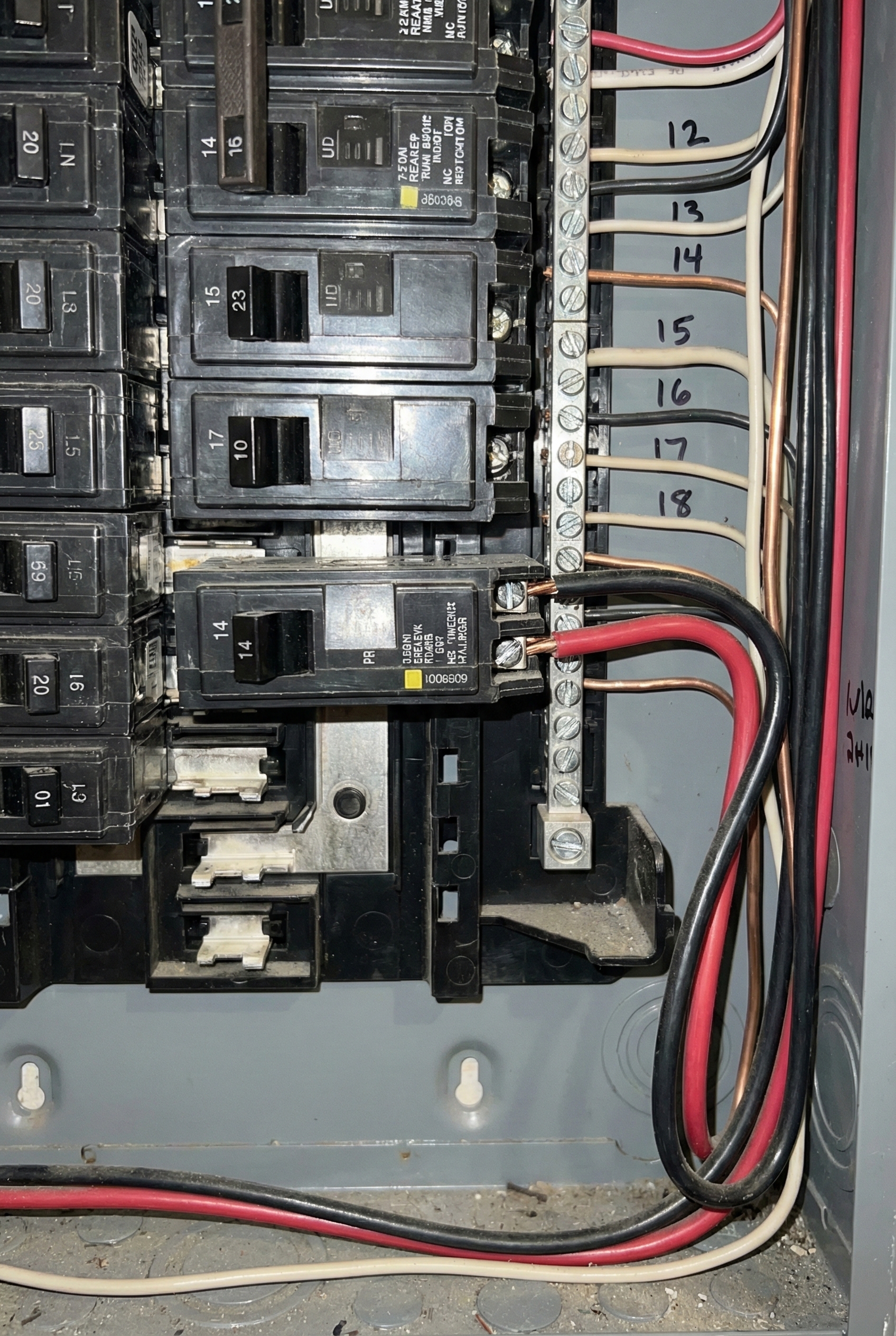 Input_Photo
 Specialized agents span four model providers, each routed per task. New capabilities start as Claude Code skills, iterated against evals, and promoted to production once they pass. The architectural pattern that governs everything: LLM to deterministic.